I’m always amazed at how a single film can be fundamentally characterized in multiple ways, but that’s understandable when the picture combines an array of diverse elements, each of which has a validity all its own that can subsequently lead to different overarching interpretations. Such is the case with this 1963 film classic from famed Japanese auteur Akira Kurosawa, which provides the cinematic inspiration behind filmmaker Spike Lee’s current reimagination, “Highest 2 Lowest,” now playing theatrically. Like the current iteration, “High and Low” follows the story of a wealthy businessman, Kingo Gondô (Toshirô Mifune), who’s looking to take control of the shoe manufacturing company for which he works, a plan that requires him to leverage his entire personal fortune to make it possible. But, just as he’s about to close the deal, he’s distracted by the alleged kidnapping of his young son...
Read in full on TMDB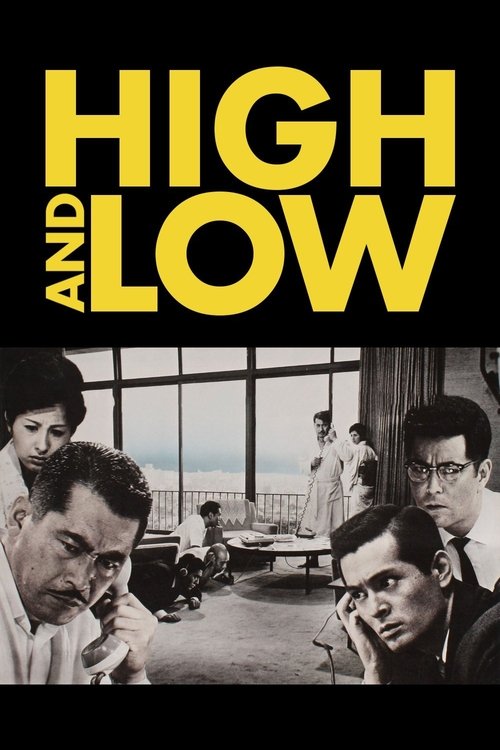
High and Low
A Yokohama shoe executive faces a wrenching choice when kidnappers mistakenly seize his chauffeur’s son but demand the ransom anyway.
- Director
- Akira Kurosawa
- Cast
- Toshirō Mifune, Tatsuya Nakadai, Kyōko Kagawa, Tatsuya Mihashi, Isao Kimura
Reviews
A well worked, high stake crime thriller. The stakes are deeply personal to our main characters and puts them in an impossible situation. The performances and direction are very solid, the story is engaging and ultimately, it's a simple yet enjoyable film. Kurosawa comments on modern corporate greed and poverty in post-war Japan, and he does it very well.
Read in full on TMDBI didn't take to this initially. The scenario reminded me a little of an episode of "Columbo" - a rather sterile, studio-set environment that came across as quite limiting. Once it gets going, though, it's one of the best crime thrillers I've seen in ages. It all centres around the kidnapping of a small boy for whom the anger-prone, shoe millionaire "Gondo" (a strong contribution from Toshirô Mifune) is supposed to pay a ransom of ¥30 million - a colossal sum. It turns out, though, that it's not his son who has been snatched - it's the child of his chauffeur. Why ought he to pay? Will he just get on with his impending company takeover or will he risk bankruptcy for the young "Shinichi"? This is a film split into three sections. The first deals with the decision making process around will he/won't he/why should he. Next, the police must try to apprehend this individual. This process is...
Read in full on TMDB